
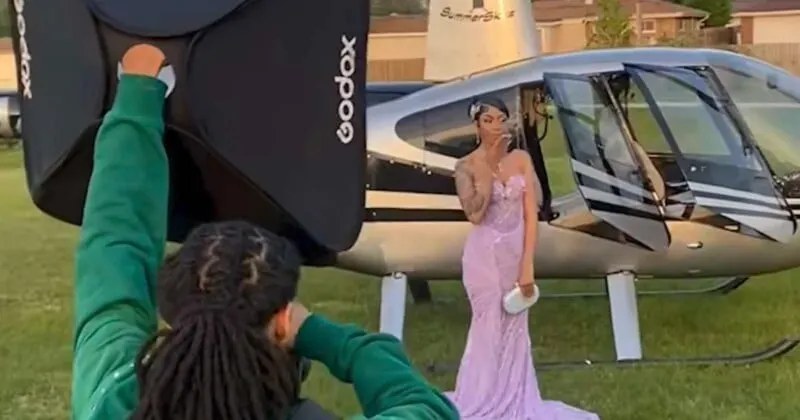
A helicopter landed in a public park so a teenager could get prom photos. Children were reportedly playing in that park at the time. And the fight now isn’t whether it happened — it’s whose card paid the deposit, and one of those answers is yours.
Source: Johnny Midnight on X — Illinois park district helicopter prom send-off
The attributed facts, reported by CBS Chicago, ABC7 Chicago and NBC Chicago: Quintina Brown, executive director of the Markham Park District in Illinois, authorized a helicopter to land in a public park for her daughter’s prom photos. CBS Chicago reports an invoice shows the roughly $800 deposit was charged to a taxpayer-funded park-district credit card, and that the helicopter company told the city attorney the deposit was charged to that card. Brown has publicly denied misusing taxpayer money, stating a personal card was used. The City of Markham has filed a lawsuit against her; she and the pilot were cited for disorderly conduct and unauthorized landing on public property, with a fine reported under $200. The allegation about the card is the invoice’s and the city’s, embedded above and on the record; her denial is hers, and we report both — we assert neither as proven.
The Story Isn’t the Helicopter. It’s the Reflex.
Strip the spectacle and look at the instinct underneath the dispute. A public park, a public budget, and a private family occasion treated — per the documents the city is now suing over — as though the line between them were a formality. Whatever a court ultimately finds about the card, the posture is the tell: the assumption that public resources flex around the convenience of the person holding the keys to them.
Translation: the question a self-governing public is supposed to ask isn’t “was it technically authorized.” It’s “why did anyone think they could even try.”
Here’s How the Small-Time Version Works
Forget the cartel-sized scandals for a second; this is the retail model, and it’s everywhere. A modest public body. A director with signing authority and little daylight. A card whose statements almost nobody reads. The amounts are small enough that scrutiny feels petty and the official can wave it off as a misunderstanding — and that’s exactly the size at which this behavior survives, multiplied across ten thousand districts nobody is watching. The helicopter only made this one visible. The structure that allowed the attempt is the unglamorous norm.
Why the Small Ones Matter More, Not Less
People assume corruption lives at the top. The durable kind lives at the bottom — in the park district, the water board, the township — because that’s where the audits are thinnest and the public’s attention never goes. A culture that shrugs at the small entitlement is a culture that trains the next official to expect the shrug. The dollar figure here is trivial. The thing it reveals is not.
The Only Honest Takeaway
Let the lawsuit and the citations run their course — that’s what they’re for, and the denial gets its hearing there. But don’t let the absurdity of the image make you miss the lesson: the people who handle your money at the level you never check are counting on exactly that inattention. Read the statements. Ask the small questions. The helicopter went up because somebody bet nobody would look down.